 Domain SearchSecure your perfect Australian domain in seconds
 Web HostingExplore budget-friendly web hosting packages
 cPanel HostingHosting powered by cPanel (The world’s most intuitive control panel)
 Reseller HostingStart your hosting reseller business, without the technical challenges
 Windows HostingOptimised for Windows applications and websites
 Affiliate ProgramGet paid for referring customers to our services
 WordPress HostingHigh-Speed, Optimised WordPress Hosting
 Email HostingSecure business email hosting using your own domain, professional, reliable, and easy to control.
 Domain TransferTransfer your domain with no downtime and complete control
 All DomainsFind and secure domain extensions from around the globe
 Whois LookupCheck domain ownership, expiry dates and registrar details
 .Com DomainSecure the world’s most trusted domain for instant credibility
 AU DomainsGet recognised .au domains made for Australian businesses and people
 SSL CertificateProtect your site with reliable SSL Certificates to safeguard data and build visitor confidence.
 Vps HostingScalable VPS. Complete access. Top-tier speed.
 Managed VPSNot a tech person? Go with our fully managed VPS service.
 Dedicated ServersGet all the power and all the control of your own physical server.
 AI Website BuilderMake professional websites in minutes with AI, no experience needed.
 Online Shop BuilderStart a professional online store. No coding needed.
 Web Design ServiceGet a website designed around your brand and built for your goals.
 BlogBrowse articles on web hosting, online business, digital marketing and other topics
 SupportGet help and instructions for all our services
 ContactConnect with us anytime using chat or email
Have you ever bought a Wildcard SSL Certificate because it felt like the simplest way to secure your entire domain and all subdomains at once?
Most Australian businesses do this because it feels fast, convenient, and cost-effective without much technical effort.
The one-certificate-covers-everything model seems attractive when you manage shops, portals, tools, and login systems across different subdomains.
You install one certificate and instantly protect a long list of URLs without touching each one separately.
It feels tidy and efficient.
It feels like you’re saving time and money.
But the same convenience that makes Wildcard SSL Certificates popular is also creating a serious and growing cybersecurity risk in Australia.
Security experts, including us at Truehost, are increasingly sounding the alarm about how dangerous a single certificate can be when it controls your entire online ecosystem.
With certificate lifespan reductions coming globally, the risk is no longer optional.
It’s now a predictable and avoidable security challenge.
This guide breaks down the issue in simple, easy English so you can properly evaluate whether your Wildcard SSL Certificate is saving you money or silently exposing your business.
The Convenience–Security Paradox
A Wildcard SSL Certificate reduces admin work because you manage only one certificate.
It cuts costs because you avoid buying separate SSLs for every subdomain.
It also simplifies your technical structure by reducing renewals and installations.
But this is exactly where the danger begins to grow.
When you rely on one certificate for everything, that same certificate becomes a single point of failure.
If it breaks, leaks, or expires, your entire digital presence goes down in one stroke.
This paradox creates the central question many Australian businesses must now ask.
Is your Wildcard helping you operate smoothly, or is it hiding a major weakness in your infrastructure?
What a Wildcard SSL Certificate Actually Is
A Wildcard SSL Certificate secures your main domain and every first-level subdomain under it.
This means one certificate can protect dozens or even hundreds of URLs.
Examples include:
- domain.com.au
- app.domain.com.au
- blog.domain.com.au
- shop.domain.com.au
All these run under a single certificate and share one private key.
That means one point of control manages all your subdomains at once.
This setup is appealing for companies with many microsites or internal tools.
It’s also attractive for organisations with distributed teams and multiple environments.
Industries in Australia using Wildcards heavily include banks, retail groups, universities, SaaS platforms, and public sector organisations.
These sectors operate many subdomains, which makes Wildcards feel convenient at first glance.
Validation Levels You Should Understand
Wildcard SSL Certificates are issued in two validation types.
These are DV Wildcard and OV Wildcard.
DV Wildcard SSL is the simplest option because it validates only domain ownership.
OV Wildcard SSL adds organisational verification for stronger trust.
There is no EV Wildcard because Extended Validation cannot be applied to Wildcards.
That means high-assurance identity checks are not available for this type of certificate.
Here is the simplified table:
| SSL Type | Wildcards Allowed | Strength | Best For |
|---|---|---|---|
| DV | Yes | Basic | Small tools and blogs |
| OV | Yes | Medium | Businesses with customer data |
| EV | No | Not allowed | — |
The Two Biggest Risks of Using a Wildcard SSL Certificate
Wildcard SSL Certificates carry two major risks that are different from single-domain certificates.
These risks are serious enough to create full-scale data breaches if mismanaged.
The first risk involves private-key exposure.
The second risk involves protocol confusion attacks like ALPACA.
Understanding these two points helps you decide whether a Wildcard is appropriate for your environment.
Most Australian breaches start with one small weakness, and a Wildcard magnifies that weakness across your entire system.
1. Wildcards Create a Dangerous Single Point of Failure
A Wildcard SSL Certificate uses one private key for everything.
If that key gets leaked, stolen, or compromised, every subdomain becomes exposed at the same time.
An attacker can impersonate any subdomain instantly.
They can redirect users, capture passwords, intercept payments, or inject malware.
If one server is weak, all servers become weak.
If one developer mishandles the key, the whole ecosystem becomes vulnerable.
This type of compromise can lead to data breaches that trigger mandatory notifications.
It can also attract investigations under the OAIC for failing to protect personal information.
A single private-key leak under a Wildcard is not a small issue.
It is a complete collapse of trust across your entire digital environment.
Many Australian breaches have originated from single credentials or exposed keys.
Using a Wildcard multiplies that exposure across all subdomains without exception.
2. Wildcards Are Vulnerable to ALPACA-Style Cross-Protocol Attacks
The ALPACA attack allows hackers to trick one service into behaving like another.
This happens when different services share the same certificate.
For example, if your FTP server and web server share the same Wildcard certificate, a hacker may trick your FTP service into responding as if it were your website.
This can lead to credential theft or session hijacking.
Cross-protocol attacks thrive when environments are not isolated.
Australian businesses with centralised systems are especially vulnerable.
If your services use different configurations or follow different rules, attackers can exploit the inconsistencies.
This exposes both users and internal systems.
The risk becomes higher when teams lack strict boundaries between subdomains.
It grows further when certificates are copied across different servers.
The Coming Crisis: SSL Certificates Are Becoming Shorter
SSL certificates used to last multiple years.
Today the maximum lifespan is 398 days.
Global policy changes are pushing certificates toward much shorter validity periods.
We expect 200-day certificates soon, followed by 100-day certificates.
There are even discussions about moving toward 47-day SSL certificates by 2029.
This is a massive shift that affects every Australian website.
Shorter lifespans mean you must renew certificates more often.
For single-domain SSL, this is manageable.
For a Wildcard SSL Certificate, it becomes incredibly risky.
One missed renewal affects everything at once.
Manual spreadsheets and reminder emails will not survive this new cycle.
Businesses depending on manual tracking will face repeated downtime.
Why Wildcard SSL Expiry Is More Dangerous Than Normal Expiry
A Wildcard expiry shuts down every subdomain instantly.
It can break public portals, internal tools, APIs, and payment systems all at once.
An expired Wildcard can cause login failures and transaction errors.
It can break mobile apps or customer dashboards without warning.
The outage is not limited to one service.
It spreads across your entire digital structure immediately.
A single expiry can cost thousands in lost revenue.
It can also attract regulatory penalties for failing to protect data.
Australian customers react strongly to outages.
A Wildcard expiry event can create social-media backlash within minutes.
The Privacy Act 1988 and Australian Compliance
Under APP 11 of the Privacy Act, Australian organisations must take reasonable steps to protect personal information.
SSL/TLS certificates are considered a critical security control under these obligations.
When using a Wildcard SSL Certificate, the OAIC expects evidence of strong key management.
They expect strict access control, renewal tracking, and environment isolation.
If a Wildcard private key is stolen, regulators may ask who had access to it.
They may also ask how you manage renewals and how you separate systems with different risk levels.
Failure to demonstrate strong governance increases legal exposure.
It also increases reputational damage and customer distrust.
Should Australia Completely Avoid Wildcard SSL Certificates?
The answer is no because Wildcards still have valid use cases.
The key is to apply them in the right contexts with strong controls.
A Wildcard works well when systems share similar trust levels.
It is useful when environments are isolated and well-managed.
The biggest problem appears when Wildcards are used casually.
They become dangerous when teams treat them as shortcuts instead of strategic tools.
When a Wildcard SSL Certificate Is Still Safe
A Wildcard is safe when all subdomains belong to environments with equal sensitivity.
It is appropriate when teams follow strict private-key policies.
It works well when automation handles renewals.
It also works when development and production environments are separated.
Many Australian SMEs operate safely with Wildcards because their structures are simple.
They use automation and maintain good discipline around key access.
When a Wildcard SSL Certificate Becomes Dangerous
A Wildcard is risky when you mix development and production systems.
It becomes dangerous when different teams copy the same key across multiple servers.
It also becomes risky when you manage renewals manually.
The risk increases when high-risk and low-risk subdomains share the same certificate.
Companies with complex digital structures should avoid Wildcards.
Businesses with large IT teams and multiple vendors should also reconsider using them.
A Smarter Approach: Scale Your Security, Not Just Your Subdomains
The future of SSL security in Australia is not about Wildcard vs. non-Wildcard.
It is about proper Certificate Lifecycle Management (CLM).
Managing certificates manually no longer works.
Shorter certificate lifespans require automated systems.
Automation prevents downtime and reduces human mistakes.
It also creates traceability that regulators appreciate.
The real question is not whether a Wildcard is good or bad.
The question is whether your organisation manages SSL properly.
Wildcard Usage Audit Checklist
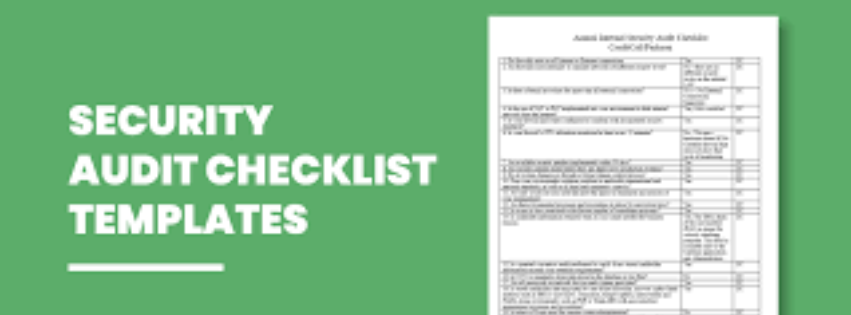
Here is a simple test you can use to assess risk.
If you answer “yes” to any of these, your Wildcard is at risk.
- Do your subdomains contain mixed trust levels?
- Are you tracking renewal dates manually?
- Do multiple teams have access to the private key?
- Are developers copying keys between servers?
If any of these apply, you should consider adjusting your SSL strategy.
A small change can prevent a major incident.
Simple Comparison Table
| Option | Pros | Cons | Best For |
|---|---|---|---|
| Wildcard SSL | Cost-effective and convenient | Single point of failure | Medium-risk setups |
| Single-Domain SSL | Strong isolation and lower breach impact | More certificates to manage | High-risk systems |
| Automated CLM | Zero expiry risk and strong governance | Requires setup | Large environments |
Truehost’s Recommendation for Australian Businesses
Truehost supports all SSL types, including Wildcards and single-domain certificates.
We also support automated certificate management to reduce risk.
We encourage automation because short certificate lifespans will keep shrinking.
Automation prevents mistakes and reduces operational stress.
We also recommend isolating high-risk subdomains.
This reduces the impact of potential breaches.
Our goal is to help Australian businesses balance convenience with real security.
This balance protects your customers, data, and compliance obligations.
Conclusion: A Wildcard SSL Certificate Is a Strategy, Not a Shortcut
A Wildcard SSL Certificate still has value when used correctly.
It saves money and simplifies installations across multiple subdomains.
But it can also expose your entire ecosystem if mismanaged.
Australia’s cybersecurity environment is becoming stricter every year.
The future belongs to strong certificate governance and automation.
It no longer belongs to manual tracking and shared keys.
If you want to stay secure and compliant, now is the right time to review your SSL strategy.
Your Wildcard can be a valuable asset only when managed with care and discipline.
Call to Action: Secure Your SSL Future
Ask yourself whether your current Wildcard setup is safe.
Consider whether you are prepared for short certificate lifespans.
If you want help building a secure strategy, Truehost is ready to assist.
We offer audits, Wildcard SSLs, single-domain SSLs, and automated CLM solutions.
Explore your SSL options here
